
Springtime rain is a welcome drink for your lawn and garden, but it’s possible to have too much of a good thing. Landscapes that do not have proper water drainage sys run the risk of collecting water – water that can be damaging on several fronts.
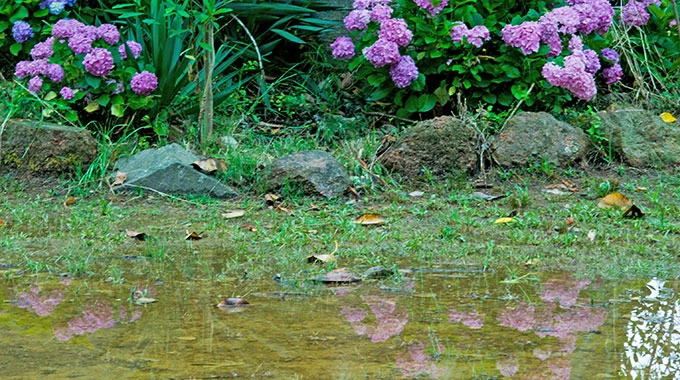
Pooling water in your lawn itself turns a carpet of grass into a muddy mess. In plant beds, too much water can flood root systems. This causes disease that can be harmful or deadly to valuable landscaping. In warmer weather, standing water is also a breeding ground for mosquitoes and other nasty pests.
There are a few ways to improve your lawn’s drainage. The right solution depends on the severity of the problem.
Planting Solutions
Minor drainage issues can sometimes be addressed with the introduction of thirsty landscape plantings that will thrive in wet areas and withstand repeated inundation with water.
French Drains
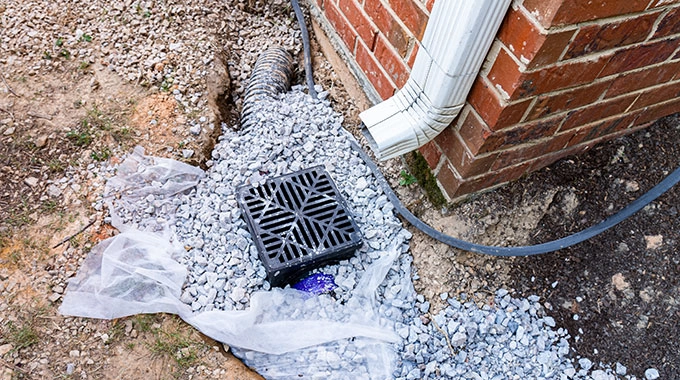
Significant drainage issues typically involve some level of excavation. French drains are a typical solution, involving a pit or trench filled with stone and gravel which acts as a natural sump for excess water. When the situation warrants, a more robust drainage system involving perforated piping laid under the soil surface can move the moisture fully out of the area. While more involved, a full drainage system of this type is really the best way to address chronic drainage issues.
Bioswales
Gently reshaping the slopes of your landscape by creating “swales” is an option that redirects stormwater. This helps point the water in a more useful direction. Swales typically include plantings that use of the excess water and allow it to be gradually filtered into the ground. Bioswales are a more common solution for commercial and municipal applications, but they can work in some residential settings.
If you have a recurring issue with drainage that is limiting your ability to enjoy your landscape, a comprehensive assessment of your drainage issue is the first step to taking back your landscape.
Now is a great time to address drainage issues on your property. Contact us today to schedule an on-site consultation.
0 Comments